


Photo provided by DepositPhotos
More than a quarter of all current Zillow listings now mention privacy or private spaces, up 7% year-over-year. That number does not happen by accident.
American homes are expensive. In many cities, they are also getting smaller. Yet homeowners are directing serious money toward outdoor privacy, not interior square footage. The backyard has become the new status symbol, and it has nothing to do with showing off.
Yards Are No Longer Optional
According to a Harris Poll conducted for the TurfMutt Foundation, 76% of Americans with a yard say it is one of the most important parts of their home. 72% say a spacious yard would top their wish list when searching for a new home.
Real estate listings reflect this shift. Backyards were mentioned 22% more often in for-sale listings in 2023 compared to the prior year, ranking as Zillow's top must-have home feature. More than one in five listing descriptions now highlights a backyard specifically.
People are also reading…
58% of buyers called a fenced backyard "essential." Among pet owners, that number climbed to 63%.
People are not just enjoying their yards more. They are making major financial decisions around them.
The Psychology Behind the Privacy Premium
There is a reason private outdoor space commands a premium. Research backs it up.
69% of Americans say yard activities like planting, mowing, or trimming are one of their primary ways to de-stress, per the TurfMutt Foundation survey. Mayo Clinic research confirms that nature exposure can improve mood, lower anxiety, and improve cognition. People who visit their private yard more frequently show greater reductions in stress and anxiety, with the effect strongest among those who own and control their space.
The key word is private. Privately owned outdoor space delivers mental health benefits that public green space alone cannot replicate. The effect is strongest for people who own and control their environment.
The backyard has turned from a luxury into a therapeutic environment.
Urban Density Is Making Privacy Scarce
Over 55% of the world's population currently lives in urban areas. The World Health Organization projects that number will reach 68% by 2050. As cities grow denser, private outdoor space becomes harder to find and more valuable to own. The demand for yards and private green space has followed that pressure directly, showing up in listing data, renovation budgets, and purchasing decisions nationwide.
The scarcity is real, yet so is the demand.
The Architecture of Control
A private backyard matters, but a designed private backyard performs differently.
Homeowners who invest in permanent outdoor structures are not decorating their yards. They are engineering environments they can control. This is the category where spending is accelerating fastest, and where architectural permanence separates a functional outdoor space from one that delivers consistent, year-round use.
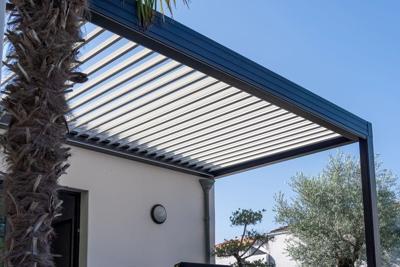
Aluminum pergola systems with adjustable louvers have emerged as a leading structure in this segment. Companies like The Luxury Pergola have built their product lines around this specific demand: structures that let homeowners manage light, temperature, and enclosure on demand, without compromising on build quality or appearance. The appeal is not aesthetic alone. It is functional. Full sun, filtered shade, or complete coverage, adjusted to suit the moment. For homeowners who have spent decades earning the right to control their environment, that capability carries real weight.
The Investment Case
Outdoor renovation is no longer a weekend project category. Median home renovation spend reached $24,000 in 2023, a 60% increase from $15,000 in 2020, per Houzz. 39% of renovating homeowners upgraded their patio or terrace in 2024. Among Gen Xers, 41% cited extending their living space as the primary reason. Among Millennials, that figure was 38%.
The National Association of Realtors reports that an overall landscape upgrade returns 100% of the average $9,000 spent. These are not vanity numbers. Outdoor privacy investment has become a financial strategy.
Why This Moment Matters
The data points in one direction. As urban density climbs and mental health becomes a mainstream priority, the private outdoor space has moved from amenity to necessity. Homeowners across income levels are making purchasing decisions based on the ability to control their environment, not expand it.
The shift from square footage to seclusion reflects something more fundamental about how people want to live, recover, and spend time at home. For the segment of homeowners who have already built the career, raised the family, and earned the house, the next investment is not more space. It is a better space, on their own terms.