


In Solon Springs, a village in northwestern Wisconsin with a population under 700, there are not many places for kids to go when the school day ends. Like many rural communities throughout the state, when the final bell rings, options for organized activities, enrichment or simply a safe space to spend the afternoon can be limited.
That is where the School District of Solon Springs’ Eagle League Program steps in.
The program is one of more than 160 Wisconsin sites funded by the federal Nita M. Lowey 21st Century Community Learning Center grant program, which supports out-of-school time programs for students in urban, rural and suburban communities across Wisconsin, providing academic support and enrichment activities for kids in the hours before and after school, as well as weekends and school breaks.
These programs are an important part of students’ days in communities across Wisconsin, large and small. But for the 32 21st CCLC sites located in rural Wisconsin communities, where there may be few other opportunities for students outside of school, they can carry an added weight.
People are also reading…
While the School District of Solon Springs has offered an out-of-school time program for 25 years, receiving the 21st Century CCLC award in 2023 enabled the district to grow its program, resulting in a 40% increase in participation and turning it into an even greater resource for the small community.
Last year, 222 students took part in at least some portion of Eagle League programming, a remarkable level of participation in a district with just over 300 students total. Program Coordinator Julie Fromm attributes this success in large part to the grant funding allowing them to offer more “voice and choice” for the kids.
“We went from ‘this is the activity we’re doing tonight because we only have one staff member,’ to being able to offer choices for the kids,” Fromm said. “Having choices helps kids feel engaged, but to have choice means we must have funding to do so. It allowed us to offer more activities the kids were interested in.”
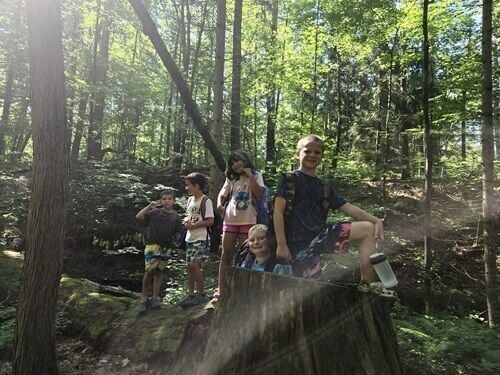
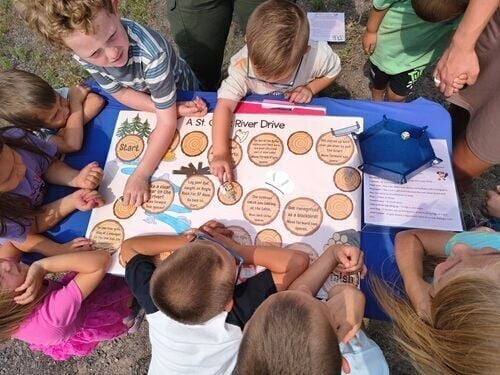
That funding provides more variety in enrichment activities offered, from STEM nights to do-it-yourself food nights, or craft and knitting nights, to name a few. Eagle League also takes advantage of the scenic geography of Solon Springs. The school is within walking distance of Upper Lake St. Croix, county parks and forests, allowing the program to offer a focus on environmental education.
“We take pride in giving kids a sense of the place we live, teaching them why it is special, and how to safely enjoy and take care of it,” Fromm said, adding that activities frequently include fishing, hiking and even building bluebird houses to monitor birds and eggs.
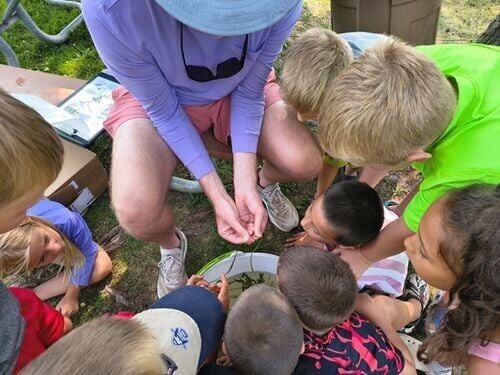
“Current research indicates that kids are on their phones and screens a lot of the time, and their mental health is suffering from it,” Fromm said. “Studies show getting out in nature is much better for their mental health, so we do try to focus on that. We know getting outside is healthy for our kids—and for our staff. Breathing in fresh air and using all our senses makes everyone feel good. Going out on the trail to identify plants and trees gets our kids reading, counting and making observations—skills they need to have as they grow up. Taking learning outside after school has many benefits, and we are lucky to have the space to do it.”
Fromm notes that another advantage of the Eagle League program is the involvement of many district staff, which gives an important sense of consistency to the students. The impact of the program can be seen in students’ experience both inside and outside the classroom. Teachers surveyed reported that 87% of Eagle League participants either improved in overall engagement in learning in the classroom or were already on track. Sixty-five percent of teachers agreed that participants improved their grade or did better in school. Eighty percent of participants agreed that the program helps them get along better with others, an especially encouraging sign for Fromm, who said they have been making intentional efforts to work on social-emotional learning during Eagle League.
This data tells an important story, but just as important—though harder to quantify—is what Eagle League means to the community of Solon Springs and, similarly, what many of these 21st CCLC sites across the state mean to their rural communities. They provide opportunities that might not otherwise exist for students, introduce them to new interests they might not otherwise encounter and offer a lifeline to families, especially many who commute longer distances to work.
“In a community of this size, the school is the biggest show in town,” Fromm said. “It’s the heart of our community. This federal program is crucial to continue the work we know is good for our kids and our families. I don’t know what kids would do without this program.”
To learn more about the Nita M. Lowey 21st Century Community Learning Center grant, including future funding opportunities, visit the DPI webpage or contact DPI21stCenturyCommunityLearningCentersGrant@dpi.wi.gov.


